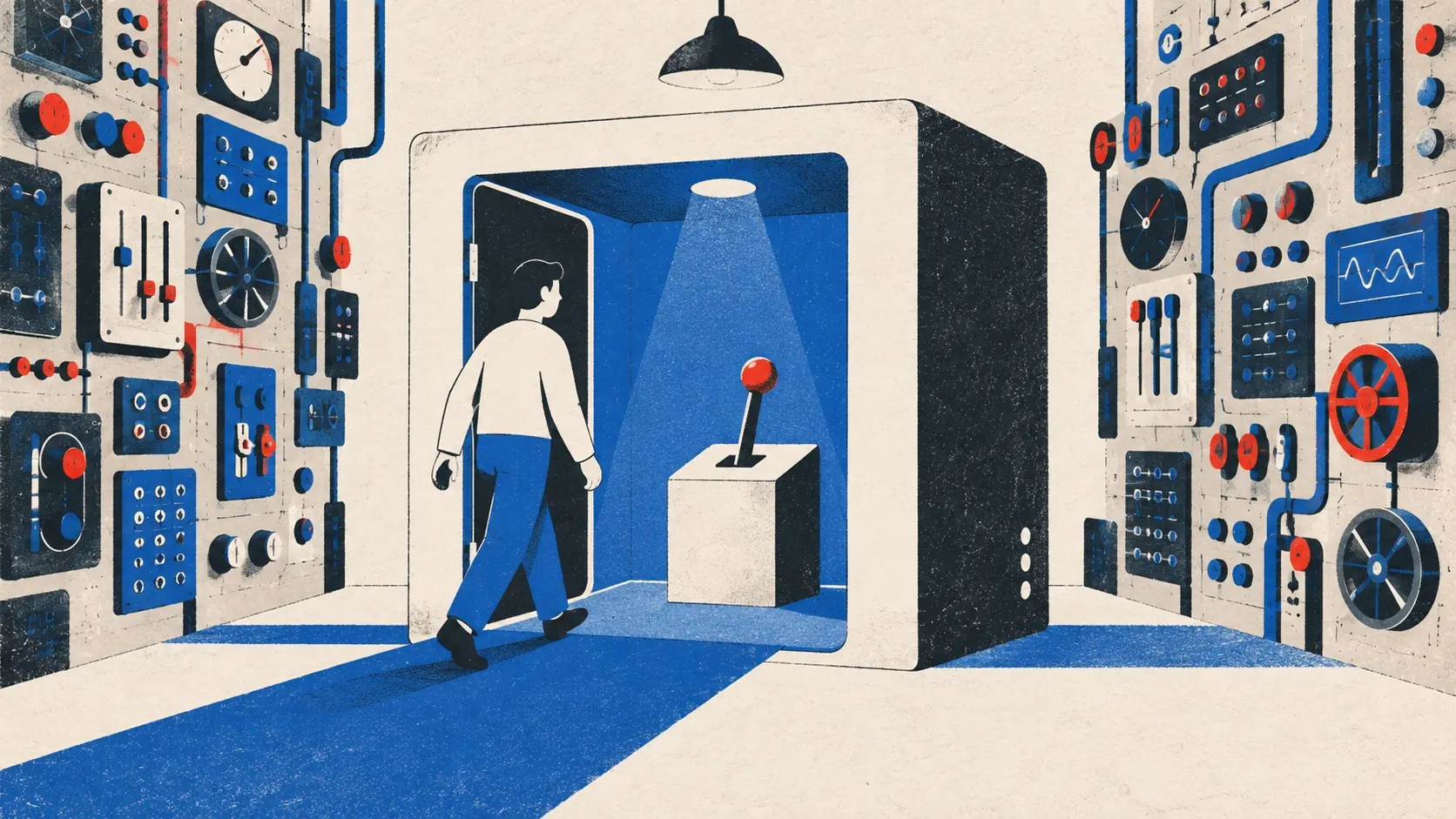
Founders polish the homepage because it is easy to revisit. Users judge the product one screen later.
The expensive part of onboarding is not the sign-up form. It is the distance between arrival and the first useful result.
A visitor does not owe your product curiosity.
Write down the first minute
Start a timer. Create a clean account. List every decision between landing and value.
Which button begins the job? What must the user know? What data must they supply? Where do they wait? What happens if they have nothing ready to import? Where can they become trapped?
Do not describe the intended flow. Record the flow that exists.
Remove choices before adding explanation
When users hesitate, founders often add a tooltip. The interface now has the same choice plus more reading.
Ask whether the choice belongs in the first session at all. Pick a safe default. Postpone customization. Hide advanced settings. Let the user change the decision later.
The first run should feel narrower than the product. It is a path, not a tour of the estate.
Use real material
Demo data can reveal what a finished result looks like, but it can also delay commitment. Move from the example to the user’s own work as soon as possible.
If setup is hard, help manually. If import is fragile, perform it with the user. If the blank state is intimidating, provide one small starting object rather than twelve templates.
The goal is not an activated account. The goal is a completed job.
Make failure legible
“Something went wrong” is not an error message. It is an admission without a remedy.
Say what failed, whether the user’s work was saved, and what they can do next. Preserve entered data. Offer a retry when retrying is safe. Give a contact path when it is not.
Test the ordinary failures: a used email address, a weak password, an expired link, a rejected card, a large file, an unsupported format, a dropped connection, and a second click on the same action.
Watch in silence
Give a new user one sentence: “Please use this to do the thing it promises.” Then stop.
Mark each pause, backtrack, misclick, and question. Do not rescue them too quickly. The discomfort is evidence. At the end, ask what they expected at each break.
Fix the earliest serious obstruction first. Later confusion may disappear once the opening is clear.
Measure the result, not the tour
Useful first-minute measures are plain: started, reached the key action, received the result, returned to it. Avoid a grand activation score assembled from events nobody can explain.
Your homepage makes a promise. Onboarding is where the user collects. Spend your care there.