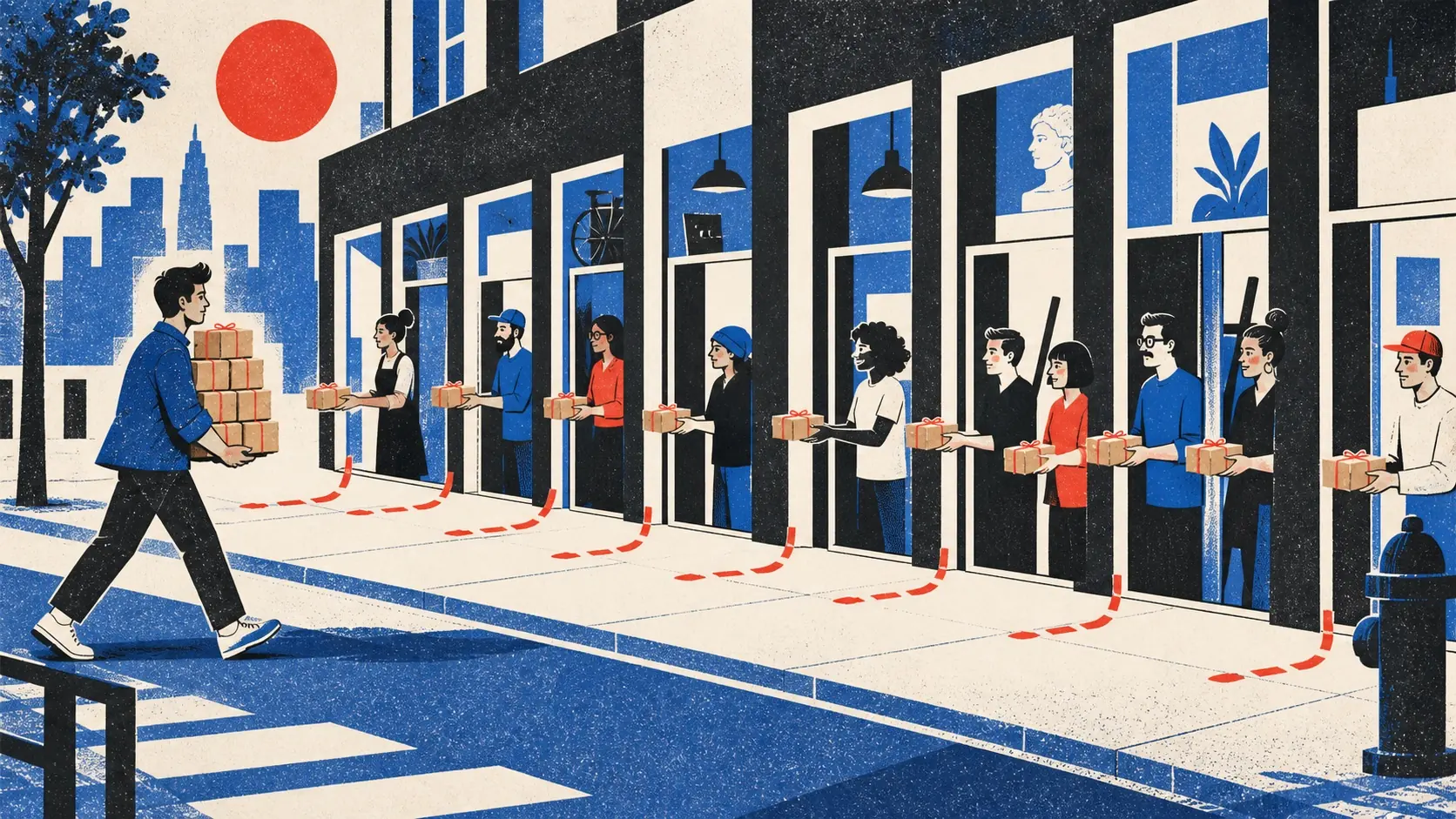
Your first ten users are unlikely to arrive because an algorithm noticed your launch. You must fetch them.
This sounds small. Good. Small numbers let you notice things.
Ten observed users teach more than a thousand anonymous visits.
Name a person, not a market
“Small businesses” cannot answer an email. “Independent accountants who prepare monthly reports in spreadsheets” can.
Write down the job, the moment of pain, and where those people already gather. A useful description is narrow enough to produce a list of names. If it only produces a market-size slide, narrow it again.
Begin with people one step away: former colleagues, customers of an adjacent tool, members of a focused community, or people publicly describing the problem. Do not ask them to support your startup. Ask whether the problem you observed is real. If you already collected emails, treat them as permission to ask again and use the waitlist cohort plan to find the few people with a live use case.
Write an invitation that can be refused
A good first message is short:
- I noticed a specific problem.
- I built a small thing that may help.
- I would like to watch you try it.
- It is fine if the timing is wrong.
Do not hide a sales pitch inside a request for “feedback.” If you want a sale, say so. If you want to learn, make the session useful even when they never buy. When the conversation does become commercial, use it as founder-led product work, not a performance handed off to a salesperson.
Install the product with them
Paul Graham tells the story of Stripe’s founders taking a willing user’s laptop and setting Stripe up on the spot. The point is not theatrical persistence. The point is to remove the distance between agreement and use.
For your product, that may mean importing the first file, writing the first template, connecting the first integration, or entering the first ten records yourself. Do the work beside the user. Watch where your explanation outruns the interface.
Early service is product research wearing work clothes.
Ask about the last time, not the imagined future
“Would you use this?” invites kindness. “Tell me about the last time this happened” invites evidence.
Ask what started the task, what they tried, what took longest, what failed, and what the failure cost. Then watch them use your product on the same job. Compliments are pleasant. Changed behaviour is useful.
Look for pull
After each session, record four facts:
- Did they reach the result?
- Did they return without being chased?
- Did they bring real data or work into the product?
- Did they introduce someone else?
One eager user is a clue. Three similar eager users are the beginning of a segment. Go find more people like them before widening the product.
The first ten users are not a miniature audience. They are ten chances to discover what the business is.
Further reading: Do Things that Don’t Scale and YC’s essential startup advice.